Are you sitting comfortably?How sound ergonomic principles impact cognition

INSIGHTS / Guide 02 / Ergonomics
James Clarke, Education Consultant - March 2026
Understanding how we design for the human body is essential, yet much of today’s classroom furniture still reflects outdated ideas about posture and ergonomics. Modern research paints a very different picture—showing why the traditional 90‑degree sitting position is problematic, why movement supports cognition, and what students’ instinctive behaviours reveal about their physical needs. The sections below explore how these insights have evolved and why more supportive, dynamic seating can make a meaningful difference to comfort, focus, and wellbeing.
The Measure of Man and Early Anthropometrics
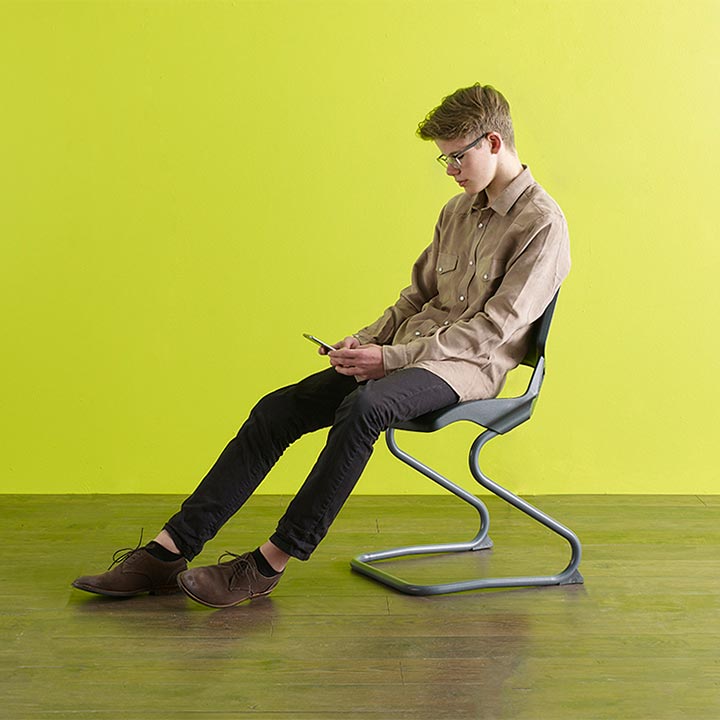
Back in the 1950s, American industrial designer Henry Dreyfuss published a book illustrated by Alvin Tilley called The Measure of Man. It contained anthropometric data sourced from over a decade of research, consolidating information from a wide range of scientific, academic, and military sources. It quickly became a bible for designers concerned with anything the human body needs to interrelate with. However, the majority of illustrations in The Measure of Man showed mannequins with their upper legs horizontal and their back vertical, creating a 90° angle between the two. Sixty‑odd years later, we now know that while a vertical back is appropriate (your head is the heaviest part of your upper body and should sit directly above your pelvis to avoid strain), the angle between your thigh and thorax should be closer to 110°–120°, dipping the legs from the horizontal.
The Measure of Man & Woman
Why the 90° Sitting Posture Is Problematic
This shift in understanding is due to the fact that the majority of your vital organs are located in the lower part of your torso. Bending your legs to create the right angle shown in Tilley’s illustrations constricts the arteries that run through these organs—arteries that in turn take oxygenated blood to the brain. Think of it like putting a kink in a garden hose: the liquid inside, whether blood or water, does not flow as freely. At the same time, care must be taken not to put pressure on another key artery—the popliteal artery—which runs down the back of the knee. This is why most chairs have a “waterfall edge” at the front of the seat pan.
Bodies in Motion StudyCognitive Control & Academic Achievement
Movement, Cognition, and the Myth of Sitting Still
Leaning Back, Posture, and Better Seating for Students